Tree Removal Metairie for Broken, Split, or Hollow Trees
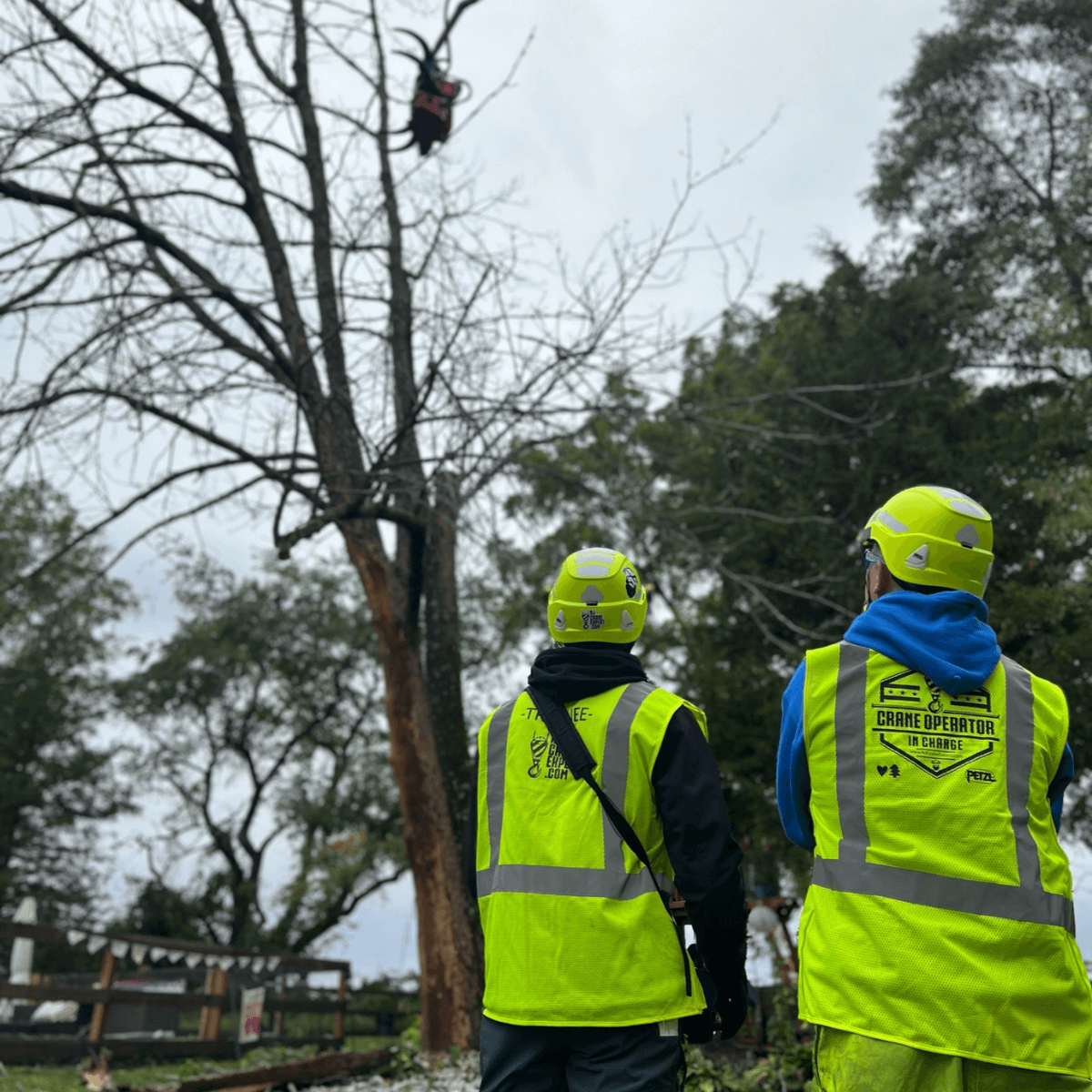
A damaged tree can look stable right up until the moment it fails. In Metairie, that matters more than many homeowners realize. We get long humid stretches, saturated soil, sudden summer storms, and the occasional hard wind event that exposes every weakness in a trunk or root system. A tree with a split main stem, a hollow cavity, or a major broken limb is not just an eyesore. It can become a direct threat to a roof, fence, driveway, power line, or anyone walking beneath it.
The hard part is that damaged trees are rarely simple. Some can be pruned and monitored for years. Others need immediate removal, even when they are still green and leafed out. That decision usually comes down to structure, species, location, and how much sound wood remains. Homeowners searching for tree removal Metairie services are often facing that exact question, usually after a storm or after finally noticing a crack they cannot ignore.
When damage crosses the line from manageable to dangerous
Not every defect means a tree has to come down. Trees are resilient. They compartmentalize wounds, add new wood around injured sections, and adapt in surprising ways. But there is a point where the internal strength no longer matches the size and weight of the canopy.
A broken tree presents obvious concern, especially when a large scaffold limb has failed and torn bark down the trunk. Those tears create much more than a cosmetic problem. The wound can expose a large area of sapwood, destabilize the remaining canopy, and invite decay fungi and insects into the wood. On species with weaker compartmentalization, that damage can accelerate decline fast in Louisiana conditions.
Split trees are often more urgent. A vertical crack between codominant stems, especially one that runs toward the main trunk union, can indicate active structural failure. Sometimes the split opens and closes with wind. Sometimes you can see included bark wedged between the stems, which means the connection was weak from the start. Cables and bracing can help in selected cases, but only when there is enough sound wood, the target risk is acceptable, and the defect has not advanced too far. If the split is substantial and the tree leans over a house or parked vehicles, removal is often the wiser path.
Hollow trees create the most confusion because a cavity is not automatically a death sentence. Plenty of old trees carry hollow sections and remain standing for years. The issue is proportion. If the trunk has lost too much sound wood around the circumference, the remaining shell may not withstand wind load. A rough rule many arborists think about is wall thickness relative to trunk diameter, though real assessment is more nuanced than a single formula. A broad, heavy canopy on a hollow base is very different from a lightly loaded ornamental tree with a modest cavity.
In practice, what matters most is not whether a tree has a defect, but whether that defect can realistically hold under local conditions.
Why Metairie trees fail the way they do
South Louisiana creates a particular set of stresses. Even healthy trees can struggle in compacted suburban soils, restricted root zones, and lots where old drainage patterns have changed over time. Add age, storm damage, and poor past pruning, and structural problems show up quickly.
Live oaks, water oaks, Chinese elms, pines, crape myrtles, and ornamental species all fail differently. A mature oak may hold on with a partial cavity for years, then lose a major limb after repeated wet-dry cycles weaken attachment wood. A pine can snap with little warning if internal decay advances in the trunk. A water oak, common in older neighborhoods, may look vigorous from the street while carrying hidden defects where old limbs were removed badly years earlier.
I have seen homeowners focus on leaves and miss the structure completely. A tree can be full of foliage and still be unsafe. Green does not mean sound. Some of the riskiest removals happen on trees that appear alive and strong until the climber gets close enough to inspect the crack, cavity, or decayed union.
That is why tree removal Metairie calls often increase right after high winds. The storm does not always create the problem. It reveals the problem that has been developing quietly for seasons.
Broken limbs are sometimes the beginning, not the end
A branch failure can seem like an isolated event. A limb falls, the yard gets cleaned up, and the homeowner assumes the crisis has passed. Sometimes that is true. Sometimes it is not.
The way a branch broke matters. A clean snap near the outer canopy is very different from a tear-out at the trunk that strips bark down several feet. If the failure involved a large limb, the remaining tree may now be unbalanced. The crown can shift weight onto tree removal metairie one side, increasing the chance of another failure in the next storm. I have seen trees lose one large limb in June and another in August because the first break changed how the whole canopy moved in wind.
The wound size matters too. Small branches can be pruned back to appropriate lateral growth and often close over reasonably well. Large wounds on mature trunks rarely seal in a way that restores structural integrity. They seal around the margins at best. Inside, decay can progress long after the bark edges begin to roll over.
Location changes the decision. The same damaged tree in an open rear lot may be worth preserving and monitoring. Hanging over a bedroom, a detached garage, or a neighbor’s fence, it may not deserve that gamble.
Split trunks usually do not get better with time
When a tree has two main stems of similar size, those stems can compete rather than cooperate. If they developed with included bark, there may be little true wood connection between them. From the ground, the union can appear thick and solid. Inside, it may be narrow, compressed, and already cracking.
A fresh split often shows sharp, pale wood inside the crack and bark pushed outward at the union. An older split may darken, collect moisture, and start decaying from within. Homeowners sometimes ask if the tree can simply be wrapped or bolted back together. In minor cases, supplemental support has a role. In severe splits, especially when one or both stems are already moving independently, mechanical support does not reverse the failure. It only delays it, and not always for long.
The worst cases are the ones that look stable because the stems are still touching. During dry weather, the crack can close enough to seem less alarming. After rain and wind, the movement returns. If the split extends into the main trunk or root flare, removal becomes much more likely.
For large trees near structures, these are not situations to watch casually. A split trunk is one of the clearest signals that a professional inspection should happen soon.
Hollow does not always mean doomed, but it should never be ignored
Cavities draw attention because they are visible. Ironically, visible hollows are often easier to assess than hidden decay. If you can see the cavity, a trained crew can at least evaluate its size, depth, and effect on the remaining shell. Hidden interior decay, by contrast, can turn a routine climb into a technical removal with very little warning.
A hollow tree may remain viable if the tree has enough strong wood around the cavity, a balanced canopy, and no significant lean or root issues. But cavities at critical points are different. Decay at the base, at a major union, or directly below a large scaffold limb raises the stakes immediately. The tree may still leaf out normally while losing the structural reserve it needs to stand through one more storm season.
Homeowners sometimes tap the trunk and listen for a hollow sound. That can tell you something, but not enough. Sound changes with moisture content, bark thickness, species, and cavity shape. It is useful as a clue, not a decision tool.
What matters in the field is the whole picture: trunk shell thickness, decay location, canopy weight, recent movement, lean, target area, and species behavior. A hollow tree over a shed is one thing. The same tree over a play area or driveway is another.
Signs a removal decision may be near
A few warning signs tend to show up again and again when a damaged tree is moving from questionable to unsafe:
- a crack that is widening or visible from the ground
- fresh wood exposed at a split union or torn branch attachment
- mushrooms or fungal growth near the base or inside a cavity
- sudden lean, root plate lifting, or soil heaving after rain
- repeated limb drop from the same side of the canopy
Even one of these signs deserves attention. Several together usually point toward a more serious structural problem.
Why removals for damaged trees are more technical than standard takedowns
There is a major difference between removing a healthy tree and removing one that is broken, split, or hollow. In a normal takedown, the crew can often predict how the tree will respond to cuts and rigging forces. In a compromised tree, those assumptions change.
A hollow trunk may not support the climber safely. A split union may fail under the tree’s own movement before rigging even begins. A broken top can shift unexpectedly when tension is applied. In some cases, a bucket truck offers a safer approach. In others, a crane is the best choice because it allows sections to be lifted with minimal shock loading on the remaining structure.
This is where experience matters. The goal is not simply to get the tree down. The goal is to dismantle it without triggering uncontrolled failure. That means reading grain, watching fiber pull, understanding load paths, and adjusting the plan in real time. A damaged tree can look manageable from the ground and become a completely different job once the crew sees the decay column, the split depth, or the actual hinge wood remaining near a failed limb.
I have seen removals where the original plan changed within ten minutes of close inspection. That is not disorganization. That is good judgment.
What a careful inspection usually considers
When a professional evaluates a damaged tree, the visible defect is only the starting point. The real question is whether the tree still has enough structural integrity for its size and setting.
A sound inspection often considers the species, age, defect type, crown weight, root condition, lean direction, previous pruning cuts, nearby targets, and likely weather exposure. Soil conditions matter too. In Metairie, prolonged wet ground can reduce root anchorage, especially in trees already stressed by construction damage or poor drainage. A tree with a moderate cavity and solid roots may stand longer than a tree with a smaller cavity and compromised root flare.
The inspection should also distinguish between urgency and importance. Some trees need same-day attention, such as those with hanging broken tops or active splitting over occupied areas. Others are serious but can be scheduled thoughtfully, allowing time for permits, access planning, utility coordination, or stump grinding decisions.
That distinction helps homeowners avoid both extremes, panic over manageable defects and delay over obvious hazards.
Removal versus pruning, cabling, or monitoring
Many people hope there is a middle option, and sometimes there is. Pruning can reduce end weight on overextended limbs. Cabling can provide supplemental support to selected stems. Ongoing monitoring can make sense for lower-risk trees in open areas. But each option has limits.
Pruning does not repair a split trunk. Cabling does not restore decayed wood. Monitoring does not reduce risk when the target beneath the tree is high value and constantly occupied. Preservation tools work best before the defect becomes severe. Once the tree crosses a certain threshold, those tools become ways to postpone an outcome that is already clear.
That is not bad news for every property. Removal can be the right move both for safety and for the landscape as a whole. Taking out one compromised tree often opens the way to plant a better-suited species in a better location. Over time, that is healthier for the yard than preserving a structurally unsound tree at all costs.
How homeowners can respond before the crew arrives
If a tree is actively cracking, leaning, or hanging over a structure, the safest response is simple and restrained. Keep people, pets, and vehicles away from the area. Do not try to climb the tree, brace it with ropes, or cut hanging limbs from a ladder. That is how routine storm damage turns into an emergency room visit.
A practical short checklist looks like this:
- move cars and outdoor furniture out of the drop zone if it can be done safely
- keep children and pets away from the tree and the area beneath it
- photograph the damage from a distance for insurance records
- note any nearby wires, fences, or blocked access points for the estimator
- avoid cleanup cuts until the tree has been professionally assessed
Well-meaning cleanup often removes evidence of how the tree failed and can make the final job harder or less safe.
Insurance, permits, and the questions worth asking
Homeowners are often surprised by how much the surrounding context affects a tree removal. If a damaged tree has already struck a structure, insurance may be involved. If it threatens utility lines, the utility company may need to be contacted before work begins. If equipment access requires crossing a neighbor’s property or tight side yard, that should be discussed early.
Metairie properties also vary widely in lot size, setbacks, and access. Some removals are straightforward front-yard jobs. Others require piecing out wood over fences, ornamental plantings, pools, or paved drives with little room for error. A low estimate that ignores access difficulty is not always a bargain. It may simply mean the work has not been thought through.
A few questions usually tell you a lot about the company’s approach. Ask how they plan to access the tree, whether the defect changes the removal method, how debris will be lowered, whether stump grinding is included, and what happens if the trunk or canopy proves more compromised than expected once work begins. Clear answers tend to come from crews that have handled this type of risk before.
The cost side of damaged tree removal
It is natural to focus on price, especially after storm season when several things on a property may need attention at once. But damaged tree removals are priced differently for good reason. Risk, labor, equipment, and disposal all increase when the tree is unstable.
A broken ornamental in an open yard may be relatively modest to remove. A hollow live oak leaning over a house with no safe drop zone can become a crane job, and that is a different level of cost. The same applies to split trunks that cannot be climbed safely and require bucket access or sectional rigging from protected positions.
The most expensive tree job is often the one delayed too long. A tree that could have been removed in a controlled setting may fail partially before the scheduled work, leaving a more dangerous and more costly problem. Roof damage, fence repair, power line issues, and emergency response fees quickly outrun the savings from postponement.
After removal, the stump and the site still matter
Once the tree is down, the work is not always finished. A decayed stump near a walkway or driveway can remain a trip hazard. If the removed tree had root decay or fungal issues, the replanting plan should account for site conditions rather than simply dropping a new tree into the same exact hole.
Stump grinding is usually the practical next step unless the area will remain naturalized. It improves usability, appearance, and future planting flexibility. For replacement, species selection matters. A small front yard in Metairie may not need another fast-growing tree with weak branch angles and aggressive surface roots. A slower, better-structured tree in the right spot often serves the property better for decades.
That is the part many homeowners appreciate later. Removal solves the immediate hazard, but good planning improves the next chapter of the landscape.
The real value of acting early
Most dangerous trees do not fail without any warning at all. They fail after warning signs were missed, minimized, or misunderstood. The split was there last spring. The cavity was getting larger. The limb that fell this month had dropped bark and smaller branches for two summers already. Hindsight makes these patterns obvious.
Early action gives you options. It allows time to inspect, compare methods, schedule the safest crew, and protect the rest of the property. Waiting until the trunk opens wider, the root plate shifts, or the canopy drops into a structure takes those options away.
For homeowners dealing with broken, split, or hollow trees, the central question is not whether the tree is still alive. It is whether it is still trustworthy. In many cases, that distinction makes all the difference. When the answer is no, professional tree removal Metairie service is not overreaction. It is the responsible step that keeps a damaged tree from becoming a much larger loss.
A Perfect Cut Tree Service
4725 Shores Dr, Metairie, LA 70006
+1 504-732-0779
FAQ About tree removal metairie
What is the average cost of tree removal in my area?
There is no single price that fits every tree. Size, condition, access, nearby structures, equipment, debris hauling and stump work affect the estimate. Request a written, site-specific quote that identifies what is included.
Who will remove trees for free?
Free removal is not generally available for ordinary private-property tree work. Utilities or public agencies may handle trees within their responsibilities. Confirm eligibility directly and do not assume that an offer or assistance program covers your tree.
Can I just cut down a tree in my yard?
Check ownership, location and local requirements first. Jefferson Parish requires a permit for removal of qualifying vegetation in the public right-of-way, and additional protections may apply in designated areas. Ask the parish about your property and have a qualified tree professional assess the work.